Wachau
The Region
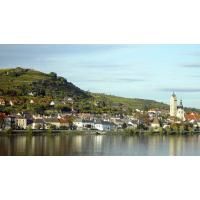
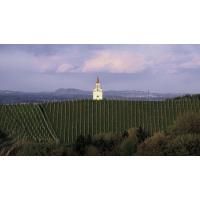
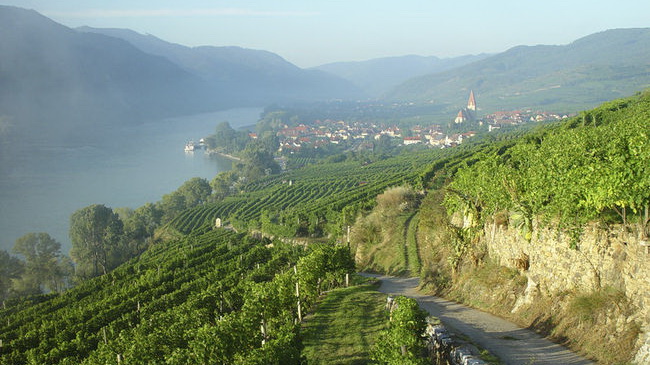
The Wachau is a region along the north shores of the Danube to the west of Vienna. It is an area of outstanding beauty with dramatic scenery along the Danube river valley. It is centred around the Baroque masterpiece of Melk and stretches for some 30km, encompassing towns including Spitz an der Donau, Joching, Weissenkirchen, Dürnstein, Loiben and Mautern.
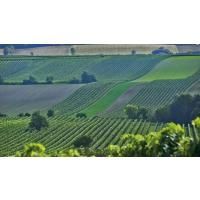
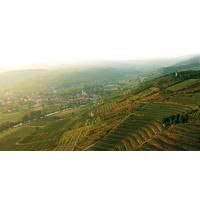
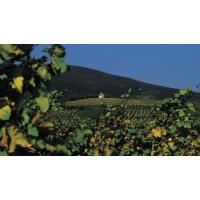
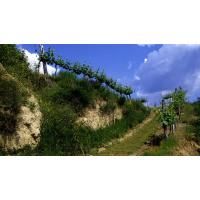
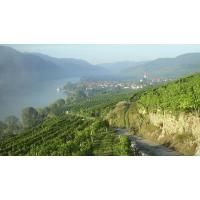
It is also widely accepted as the source of the most desirable Austrian white wines. Not only are the wines sublime, but the countryside is also beautiful, with apricot orchards and steep terraced vineyards on both sides of the river melting harmoniously into medieval villages, with the Danube itself, some 200 metres wide here, providing a majestic backdrop to the beauty of the region.
The western end of the Wachau with cooler night time temperatures has the most elegant wines while the fuller-bodied and more powerful examples come from further downstream peaking around Loiben and Dürnstein.
The very best Wachau wines are however scarce, given the cult status of many producers.
Wine Statistics
- 2.75% of national production.
- Cultivated area, 2720 ha approximately .
- Average 33.3°C in summer and a minimum -12.1°C in winter.
- Sun exposure, 1815 hours per year.
- Average annual rainfall, 545mm with rainy days.
- Lowest elevation 200 metres, highest elevation 500 metres.
- Soils are a mix of weathered gneiss over primary rock, gravel and loess, allivial gravel, sand and loam.
Terroir
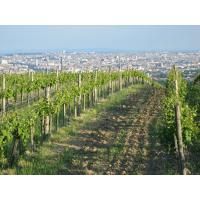
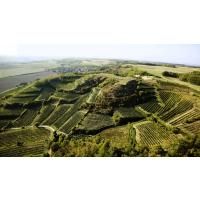
The Wachau has 1,390 hectares of vines, planted in soils of weathered primary rock, sand and loess. In addition to Riesling and Grüner Veltliner, other typically Austrian varieties grown here include Neuburger and Gelber Muskateller. The "Vinea Wachau Nobilis Districtus" is the local association to which most local winemakers belong and which defines the classification of Wachau wines - Steinfeder, Federspiel and Smaragd.
The geology in the Wachau is based around soils derived from primary rock, known here as urgestein. This is composed largely of granite, gneiss or mica-schist, although the composition varies somewhat throughout the region. With slate in the west around Spitz, more loam in around Weissenkirchen in the central Wachau and then in the east around Krems, the gateway to the Kremstal, some limestone.
The climate in the Wachau varies quite significantly over short distances and is quite interesting. At the western end around Spitz, it is cooler, as here cold winds can blow down from the mountains, so the wines are more fragile and have more of a nervy steely character than in the east. In the east where the land is flatter, the climate is starting to become affected by the Pannonian climate of the great Hungarian Putsch near the Austrian/Hungarian border, around the Neusiedlersee this is much more pronounced with bitterly cold winters and hot arid summers.
Everywhere in the Wachau the climate is moderated by the proximity of the river, although it can be very dry in summer and limited irrigation is permitted. Because of the differences in the climate the harvest date also varies, being a bit earlier in the east than around Spitz.
The Loibenberg and Steinertal hill is the hottest/most sun exposed vineyard in the Wachau - you can tell!
Wachau Wine Grapes
The most typical varieties in Wachau
-
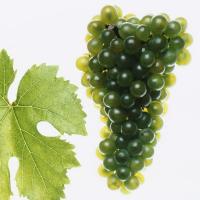 Grüner Veltliner
Austria's favourite white wine
-
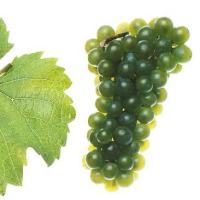 Riesling
The great white wine, for good reason
Wachau Wine Producers
-
 Weingut Alzinger
Wines like diamonds
Visiting
The region blooms during the apricot season in the springtime (Apricot or Marillen brandy is another regional speciality) and this is a wonderful time to visit
-
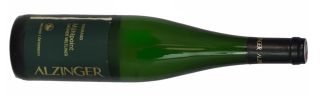 Grüner Veltliner Smaragd Mühlpoint 2023A lesson in Grüner£37.50Out of stockWinemaker: Leo AlzingerCountry: AustriaVariety: Grüner VeltlinerVintage: 2023
-
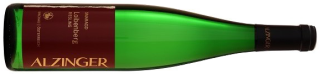 Riesling Smaragd Loibenberg 2008The warmest of Alzinger's location so the riper, fruitier of them all£48.00Winemaker: Leo AlzingerCountry: AustriaVariety: RieslingVintage: 2008
-
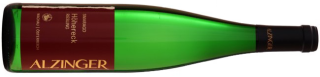 Riesling Smaragd Hohereck 2009Another beauty by Alzinger£40.80Winemaker: Leo AlzingerCountry: AustriaVariety: RieslingVintage: 2009
-
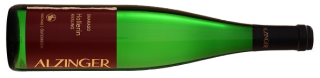 Riesling Smaragd Hollerin 2010Alzinger is a Riesling superstar. Hollerin is a sweet spot, more complexity but still a good price£43.20Winemaker: Leo AlzingerCountry: AustriaVariety: RieslingVintage: 2010
-
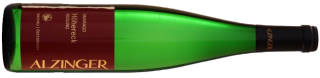 Riesling Smaragd Hohereck 2011Warmer year, bolder Riesling£40.80Winemaker: Leo AlzingerCountry: AustriaVariety: RieslingVintage: 2011
-
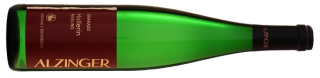 Riesling Smaragd Hollerin 2011Alzinger is a Riesling superstar. Hollerin is a sweet spot, more complexity but still a good price£43.20Winemaker: Leo AlzingerCountry: AustriaVariety: RieslingVintage: 2011
-
 Grüner Veltliner Federspiel Steinertal 2014Federspiel in 2014£42.00Winemaker: Leo AlzingerCountry: AustriaVariety: Grüner VeltlinerVintage: 2014
-
 Riesling Reserve 2014Best after 20 years, but sooo good now.£59.40Winemaker: Leo AlzingerCountry: AustriaVariety: RieslingVintage: 2014
-
 Grüner Veltliner Smaragd Steinertal 2015Another Leo Alzinger masterpiece.£56.04Winemaker: Leo AlzingerCountry: AustriaVariety: Grüner VeltlinerVintage: 2015
-
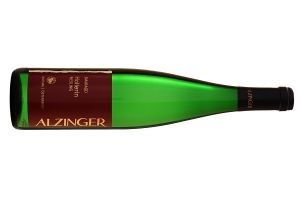 Riesling Smaragd Hollerin 2015Alzinger is a Riesling superstar. Hollerin is a sweet spot, more complexity but still a good price£43.20Winemaker: Leo AlzingerCountry: AustriaVariety: RieslingVintage: 2015
-
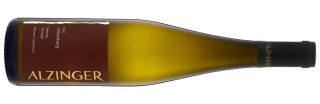 Riesling Smaragd Steinertal 2015The Riesling lover's cult Riesling£70.80Winemaker: Leo AlzingerCountry: AustriaVariety: RieslingVintage: 2015
-
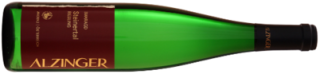 Grüner Veltliner Smaragd Steinertal 2017Another Leo Alzinger masterpiece.£56.40Winemaker: Leo AlzingerCountry: AustriaVariety: Grüner VeltlinerVintage: 2017
-
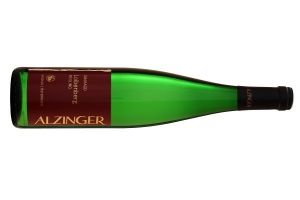 Riesling Smaragd Loibenberg 2017The warmest of Alzinger's location so the riper, fruitier of them all£54.46Winemaker: Leo AlzingerCountry: AustriaVariety: RieslingVintage: 2017
-
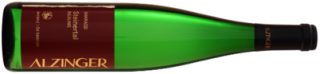 Riesling Smaragd Steinertal 2017The Riesling lover's cult Riesling£60.00Winemaker: Leo AlzingerCountry: AustriaVariety: RieslingVintage: 2017
-
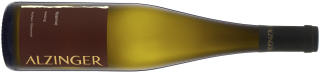 Riesling Reserve 2017Best after 20 years, but sooo good now.£59.40Winemaker: Leo AlzingerCountry: AustriaVariety: RieslingVintage: 2017
Austrian Wine Regions